Gluten-Free Baking Science: Why Your Bakes Fail and How to Fix Them
Gluten-free baking fails differently than regular baking — the crumbles, the gummy centers, the bricks — because gluten was doing invisible structural work that its absence exposes. The science guide: what gluten did, what replaces it and the technique pivots that turn failures into keepers.

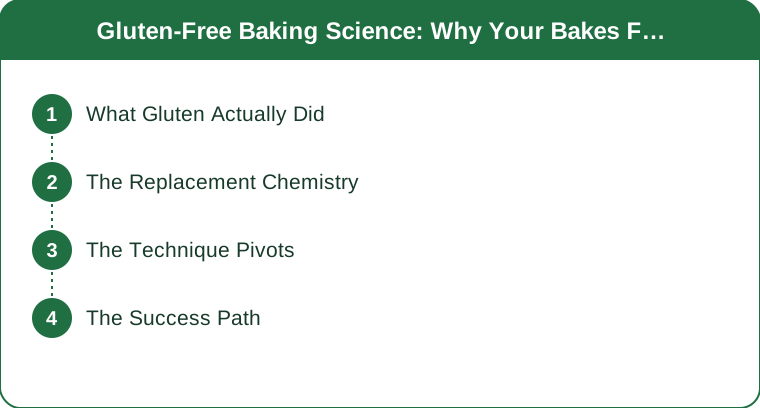
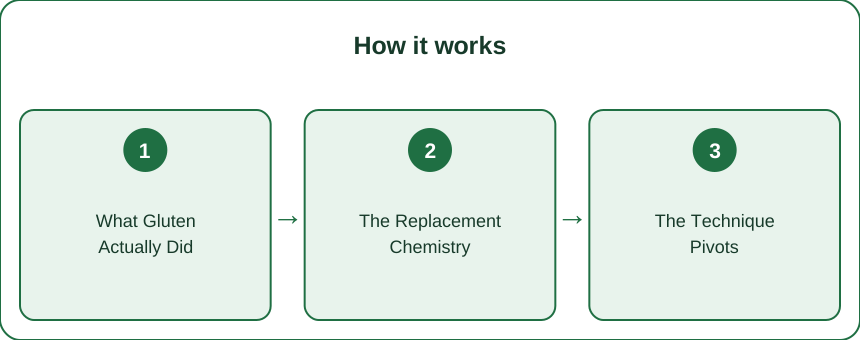
What Gluten Actually Did
The missing employee’s job description: the structure role (gluten forms the elastic network that traps gas and holds shape — the stretch that lets dough rise and spring; without it, gas escapes and structures collapse), the binding role (the cohesion that keeps crumbs attached — the GF crumble problem is unemployment where gluten worked), the moisture management (the network that held water in place — the gummy-center and dry-by-tomorrow problems are both water misbehaving), and the diagnosis frame (every GF baking failure maps to one of these vacancies — naming which job went unfilled points at the fix).
The Replacement Chemistry
Filling the vacancies: the binder tier (xanthan and guar gums — the elasticity substitutes at quarter-teaspoon-per-cup scales; psyllium husk — the bread-baking champion whose gel mimics gluten’s stretch best of all; the ground-flax-and-chia gels for the gum-averse), the blend doctrine (single GF flours fail alone — the successful blends balance starches for lightness, whole flours for structure and protein for browning; the tested commercial blends earned their price for beginners, and the ‘cup-for-cup’ labels mean the binders are already in), the moisture rebalance (GF flours drink differently — most recipes want MORE liquid and benefit from batter rests that hydrate the flours; the thirty-minute rest is the free upgrade), and the protein assists (eggs work overtime in GF baking — the extra egg or the egg-white addition is structure insurance).

The Technique Pivots
Baking differently on purpose: the mixing liberation (no gluten means no over-mixing fear — GF batters can be beaten thoroughly; the gentle-folding habit from wheat baking is unnecessary caution here), the rest-before-baking rule (the hydration pause that ends grittiness — the pivot most converts call the game-changer), the temperature-and-time shifts (GF bakes often want slightly lower-and-longer — the browned-outside-raw-inside failure is heat outpacing the different structure; the toothpick test trusted over the clock), the pan strategy (smaller pans and muffin formats succeed where big loaves struggle — structure scales badly without gluten; the beginner path runs through muffins), and the cooling patience (GF structures SET while cooling — the warm slice that gummed was cut too soon; the full cool is part of the bake).
The Success Path
Building the skill: the start-list (the naturally-GF bakes first — flourless chocolate cake, meringues, macaroons and the almond-flour tier were never missing gluten; the confidence builders before the conversions), the recipe-source honesty (GF-developed recipes beat converted wheat recipes — the developers already ran the failures; the from-scratch conversion is the advanced course), the one-change experimentation (the flour-blend swap OR the binder adjustment per attempt — the baking version of the one-variable rule), and the expectation calibration (great GF baking is its own excellent thing — the goal of indistinguishable-from-wheat sets up disappointment; the goal of delicious succeeds weekly; the almond-flour brownie isn’t imitating anything). Science named, vacancies filled, techniques pivoted: the oven cooperates.
Gluten was structure-binding-moisture, psyllium and blends fill in, rest the batter, cool completely. GF baking fails on unfilled vacancies — the science fills them and the bakes keep.
Keep Reading
This article is for general informational purposes only and is not medical advice. Always consult a qualified health professional for guidance specific to you.