Going Gluten-Free: The Practical Guide (For the Diagnosed, the Sensitive and the Curious)
Few dietary topics carry more confusion per grocery aisle than gluten: for people with celiac disease, avoiding it is non-negotiable medicine; for the gluten-sensitive, it is real relief mocked by skeptics; for the merely curious, it is a fog of marketing and eye-rolls. This guide serves all three honestly — what gluten actually is, who genuinely benefits from dropping it, and the practical playbook for doing it well without malnutrition or mourning. (Medical note up front: persistent gut symptoms deserve a doctor and celiac testing before you go gluten-free — testing requires gluten in the diet to work.)

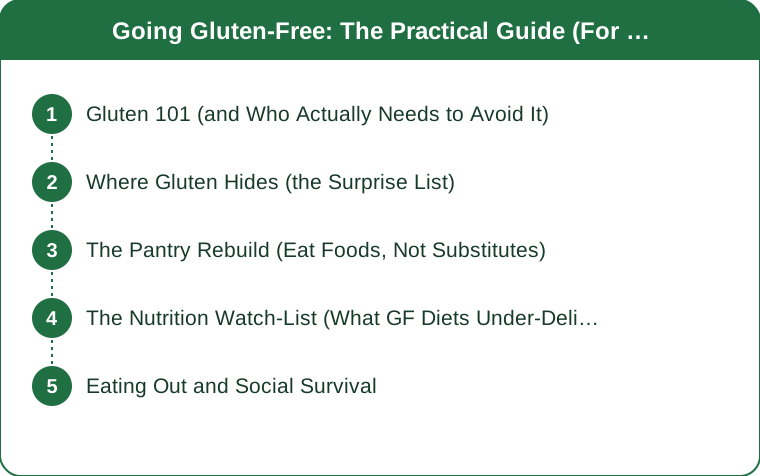
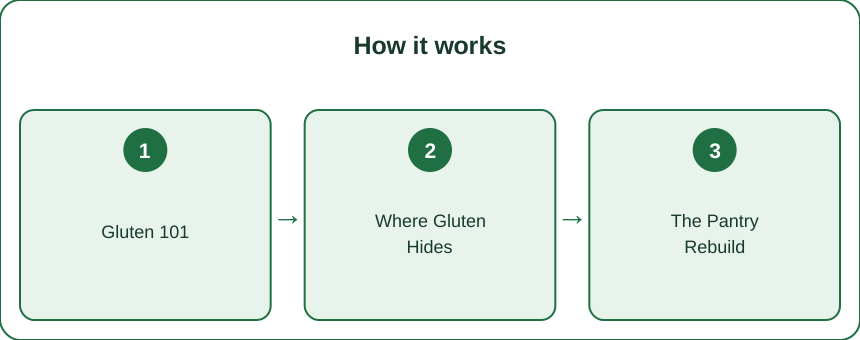
Gluten 101 (and Who Actually Needs to Avoid It)
The facts, sorted: gluten is a protein family in wheat, barley and rye — the elastic stuff that makes dough stretchy. Celiac disease (roughly 1% of people, most undiagnosed) is an autoimmune condition where gluten triggers genuine intestinal damage: strict lifelong avoidance is the only treatment. Non-celiac gluten sensitivity is real but murkier — symptoms improve off gluten without celiac markers (some cases may actually react to FODMAPs traveling with wheat). And for everyone else: gluten is not inherently unhealthy, and gluten-free does not mean healthy — a fact the cookie aisle exploits ruthlessly. Know which reader you are; the strictness settings differ enormously.
Where Gluten Hides (the Surprise List)
Beyond the obvious bread-pasta-pastry axis, gluten lurks professionally: soy sauce (wheat-based — tamari is the swap), most beer, many salad dressings and marinades, soups thickened with flour, imitation crab, licorice, some oats (naturally gluten-free but contamination-prone — buy certified GF oats), spice blends with anti-caking flour, and the communion-wafer-to-lipstick long tail that matters mainly for celiac-level strictness. Label literacy is the skill: wheat must be declared in allergen statements, but barley and rye hide in malt and natural flavors. Celiac shoppers learn the certified-GF logo; the sensitive-and-curious can run looser. Cross-contamination (shared toasters, fryers, cutting boards) matters medically for celiac and mostly not for the curious.

The Pantry Rebuild (Eat Foods, Not Substitutes)
The winning strategy inverts the instinct: instead of replacing every wheat product with its GF simulacrum, build meals from the enormous world that never contained gluten — rice, potatoes, corn, quinoa, beans, all meats and fish, eggs, dairy, every fruit and vegetable, nuts and seeds. This route is cheaper, more nutritious and less mournful than substitute-stacking. Then add the worthy substitutes selectively: good GF pastas (corn-rice blends and lentil pastas hold texture), certified oats, corn tortillas as the workhorse bread replacement, and one decent GF bread for toast emergencies (frozen, because GF bread stales with vindictive speed). The sad-substitute era of GF eating is genuinely over — but the naturally-GF plate was always the better core.
The Nutrition Watch-List (What GF Diets Under-Deliver)
The honest downside management: wheat products in the US are fortified, and dropping them can quietly lower fiber, B vitamins, folate and iron intake — the documented gaps of long-term GF eaters who lean on substitute products (which are typically less fortified and lower-fiber than what they replace). The countermeasures: fiber from beans, vegetables, chia and certified oats daily, B-and-iron attention via eggs, meat, legumes and leafy greens, and a once-yearly bloodwork sanity check for the strictly GF. The theme repeats: a whole-foods GF diet self-solves most of this; a GF-cookie-and-white-rice-bread diet does not. The label was never the nutrition strategy.
Eating Out and Social Survival
The real-world skills: restaurant strategy scales by strictness — celiac diners lead with the allergy framing (I have celiac — can the kitchen handle gluten-free safely? — the staff response quality is itself the answer), check menus online first, and favor cuisines with natural GF depth (Mexican, Thai, Vietnamese, steakhouse); the sensitive-and-curious can simply order the naturally-GF options without the kitchen interview. Social scripts stay breezy (no thanks, I skip gluten — delivered like a fact, not a debate invitation), potlucks reward bringing a dish you can definitely eat, and the eye-rolling relative gets nothing but a subject change. Your plate, your data, your business. The bread basket will survive the rejection.
Gluten-free, practically: test before you quit (celiac testing needs gluten on board), build the plate from naturally-GF whole foods rather than substitute stacks, learn the hidden-gluten label game to your needed strictness, guard fiber and B vitamins, and carry two breezy social scripts. Whether medicine, relief or experiment — run it well and judge by how you feel. The aisle of marketing can keep its halo. You have a system now.
Keep Reading
This article is for general informational purposes only and is not medical advice. Always consult a qualified health professional for guidance specific to you.