How to Actually Eat Gluten-Free at Restaurants Without Getting Sick or Feeling High-Maintenance
Quick Answer: Calling ahead during a slower time (rather than asking rushed questions during a busy dinner service) and asking specifically about shared cooking surfaces and fryers — not just whether a dish ‘contains gluten’ — are the two adjustments that most reliably improve both actual safety and the interaction’s smoothness, since kitchen staff can give a more thoughtful, accurate answer with advance notice and a more specific question than a rushed, general one during peak service.
The specific timing and phrasing of the question matters as much as asking the question itself.

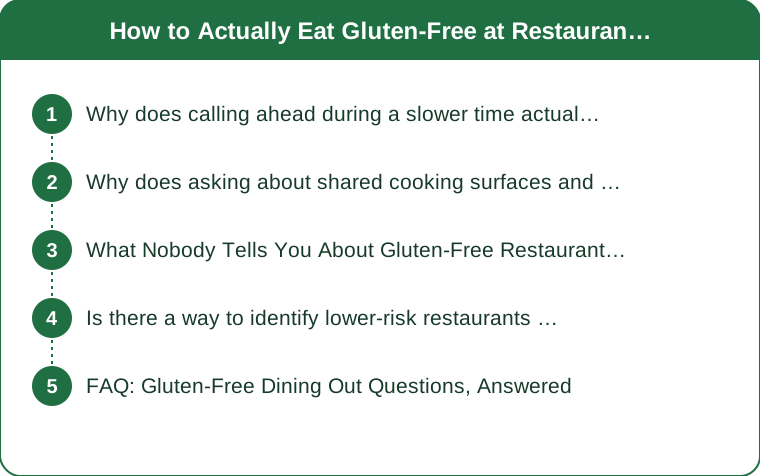
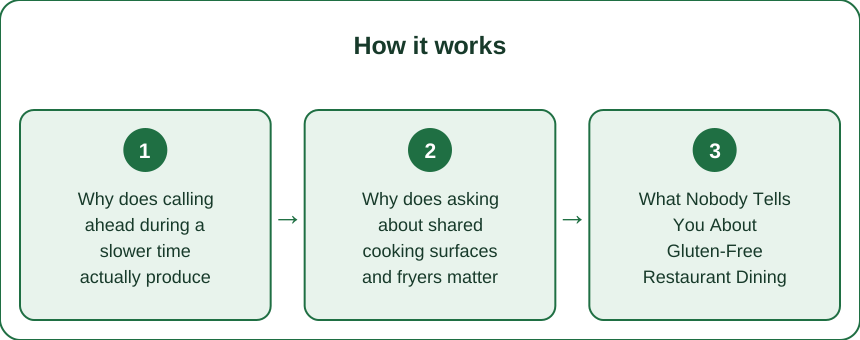
Why does calling ahead during a slower time actually produce more reliable information than asking during the meal?
During a busy dinner service, a server or kitchen has limited time to think through a specific gluten question carefully and may give a quick, less accurate answer just to keep things moving, while a call during a slower afternoon period allows kitchen staff time to actually check ingredients and preparation methods before responding.
This timing difference is one of the most consistently recommended strategies from people managing celiac disease or serious gluten sensitivity specifically, since the quality and accuracy of the information received matters more for actual safety than simply asking the question at all.
Why does asking about shared cooking surfaces and fryers matter more than just asking if a dish ‘contains gluten’?
A dish’s listed ingredients might not contain gluten at all, but if it’s cooked on a shared grill surface or in a fryer also used for breaded, gluten-containing items, cross-contamination can still occur even though the dish’s own ingredients are technically gluten-free.
This is why the more specific question about shared equipment and preparation surfaces provides meaningfully more useful safety information than the ingredient-only question, particularly for anyone with celiac disease or a sensitivity severe enough that even trace cross-contamination causes a reaction.

What Nobody Tells You About Gluten-Free Restaurant Dining
Nobody tells you that restaurants with a dedicated gluten-free menu have often already worked through these cross-contamination questions systematically, making them a genuinely lower-effort, lower-risk choice when available.
Nobody tells you that a manager or kitchen staff member, rather than a server who may not know preparation details firsthand, is often the more reliable person to ask a detailed cross-contamination question to.
Nobody tells you that being specific and calm in how you ask (rather than apologetic or overly casual) tends to get a more thorough, accurate answer, since it signals the question is a genuine safety need rather than a casual preference.
Is there a way to identify lower-risk restaurants before even calling or asking questions in person?
Checking whether a restaurant has a specifically labeled gluten-free menu (rather than just a few items marked ‘GF’ on a regular menu) is a reasonably reliable initial screening signal, since a dedicated menu usually indicates the kitchen has already established specific protocols, and checking recent reviews specifically mentioning gluten-free experiences can reveal real-world track record beyond the menu itself.
Cuisines that are naturally more gluten-free-friendly in their core ingredients and preparation methods (many Thai, Mexican, or specific Mediterranean options, for example) can also be a reasonable lower-risk starting point compared to cuisines built more centrally around wheat-based preparation.
FAQ: Gluten-Free Dining Out Questions, Answered
Is it necessary to explain celiac disease specifically, versus just saying ‘gluten-free’ as a preference?
Being specific about needing this for a medical reason (celiac disease or a diagnosed sensitivity) rather than framing it as a general preference tends to result in kitchen staff taking cross-contamination more seriously.
Are fried foods generally riskier to order even if the item itself is gluten-free?
Yes — shared fryer oil with breaded, gluten-containing items is one of the most common cross-contamination sources, making a specific question about dedicated fryer use particularly worthwhile for fried menu items.
Does traveling to a new city require different research than dining locally?
The same core strategies apply, though checking specific local reviews and dedicated gluten-free restaurant directories for that particular city can surface options you wouldn’t otherwise know to look for.
TL;DR:
- Calling ahead during a slower time produces more accurate answers than rushed questions during busy service
- Asking specifically about shared cooking surfaces and fryers reveals more than an ingredients-only question
- A dedicated gluten-free menu is a reasonably reliable signal the kitchen has established real protocols
- Being specific about a medical need, rather than framing it as a preference, tends to get taken more seriously
The right timing and specific phrasing resolves most of the tension between safety and feeling like a difficult customer. This is general information, not medical advice.
Keep Reading
This article is for general informational purposes only and is not medical advice. Always consult a qualified health professional for guidance specific to you.