Why Your Gluten-Free Baking Keeps Turning Out Gummy or Crumbly
Quick Answer: Gummy gluten-free baked goods usually mean too much starch and not enough structure (protein/fiber), while crumbly ones mean too little binding — a proper blend needs a starch, a protein-rich flour, and a binder like xanthan gum in the right ratio, not just ‘gluten-free flour’ as one ingredient.
You followed the recipe exactly and still got a gummy center or a loaf that falls apart when sliced. Both problems trace back to the same root cause: gluten-free flour isn’t one ingredient, it’s a system, and most single-flour swaps break that system.

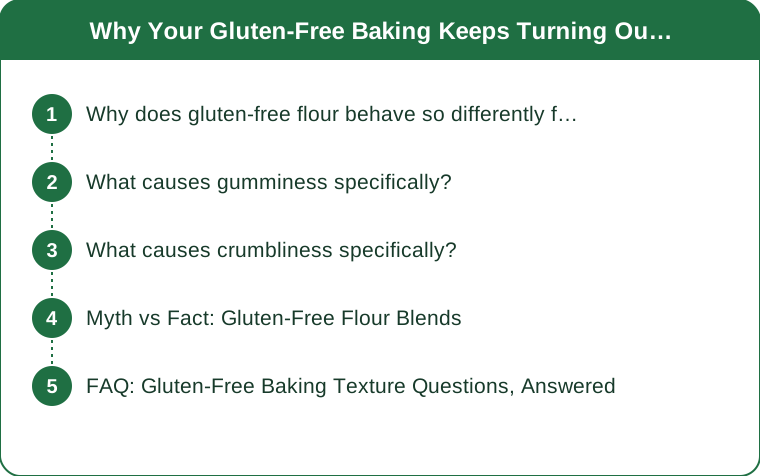
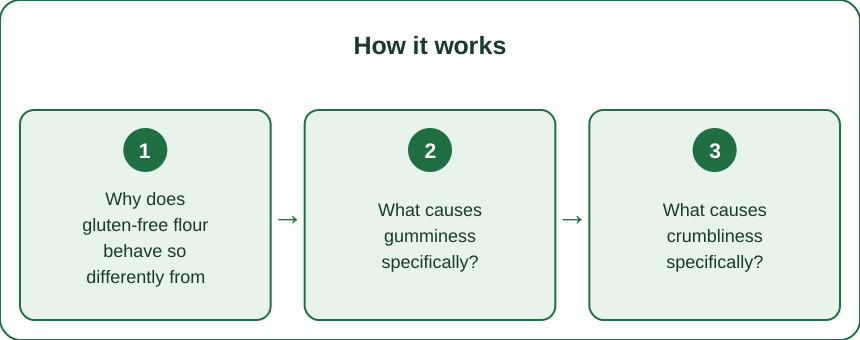
Why does gluten-free flour behave so differently from wheat flour?
Because gluten itself is the structural protein that gives wheat baking its stretch, chew, and binding — gluten-free flours have to rebuild that function from a combination of starches, proteins, and gums instead of one ingredient doing all the work.
A 1:1 ‘cup for cup’ commercial blend already contains this combination, which is why swapping a single gluten-free flour (like just almond flour or just rice flour) for a 1:1 blend in a recipe usually fails — you’re replacing a system with one component of it.
What causes gumminess specifically?
Excess starch relative to structure-building flour, or underbaking. Starches (tapioca, potato starch, cornstarch) add lightness but don’t set the way protein-based flours do — too much starch in a blend, or pulling a loaf out before the center fully sets, both produce that dense, gummy middle.
The fix: rebalance toward more of a protein-rich gluten-free flour (sorghum, brown rice, oat) relative to starches, and confirm doneness with an internal temperature check (205-210°F for bread) rather than trusting a visual crust color, which sets faster than the gluten-free interior does.

What causes crumbliness specifically?
Insufficient binding. Xanthan gum or psyllium husk are what hold gluten-free baked goods together in gluten’s absence — skipping them, or using too little, produces a texture that looks done but falls apart on slicing.
Standard ratio: 1/2 to 1 tsp xanthan gum per cup of gluten-free flour for most baked goods (breads need slightly more than cookies). If a recipe doesn’t call for a binder at all and isn’t already using a pre-blended 1:1 flour, that’s likely your crumbling culprit.
Myth vs Fact: Gluten-Free Flour Blends
Myth: Any gluten-free flour can substitute for any other 1:1. Fact: Almond flour, rice flour, and oat flour have very different protein, fat, and absorbency profiles — swapping them 1:1 without adjusting liquid or binder amounts is one of the most common causes of both gummy and crumbly results.
Myth: More xanthan gum always means better texture. Fact: Too much creates a slimy, overly elastic texture — more isn’t better past the recipe’s calibrated amount; it’s a precision ingredient, not a ‘safety margin’ one.
FAQ: Gluten-Free Baking Texture Questions, Answered
Can I fix a gummy loaf after baking?
Not fully, but slicing and toasting individual pieces evaporates some excess moisture and improves texture for that serving.
Do all gluten-free recipes need xanthan gum?
Most yeasted breads and structured baked goods do; some naturally dense recipes (flourless cakes, certain cookies) don’t rely on it as heavily.
Why does my gluten-free bread taste fine but look sunken in the middle?
That’s usually underbaking combined with too much starch — check internal temperature rather than baking time alone, and consider reducing starch slightly next attempt.
TL;DR:
- Gluten-free flour is a system (starch + protein flour + binder), not a single swap-in ingredient
- Gumminess = too much starch or underbaking; check internal temp, not just crust color
- Crumbliness = not enough xanthan gum or psyllium husk binding the structure
- Don’t swap gluten-free flours 1:1 without adjusting liquid and binder ratios
Rebalance the blend toward structure and confirm doneness by temperature, and both problems usually disappear together.
Keep Reading
This article is for general informational purposes only and is not medical advice. Always consult a qualified health professional for guidance specific to you.