Gluten-Free Labeling Decoded: What 'Certified,' 'Made In,' and 'May Contain' Actually Mean
Quick Answer: ‘Certified gluten-free’ means third-party tested to under 10-20ppm gluten depending on the certifier. ‘Gluten-free’ on its own (FDA-regulated) means under 20ppm. ‘Made in a facility that also processes wheat’ is a voluntary allergen disclaimer, not a gluten content guarantee — and ‘may contain’ phrasing means the product hasn’t been tested at all.
Three different packages, three different disclaimers, and none of them mean quite the same thing — a genuinely confusing labeling landscape even for experienced gluten-free shoppers.

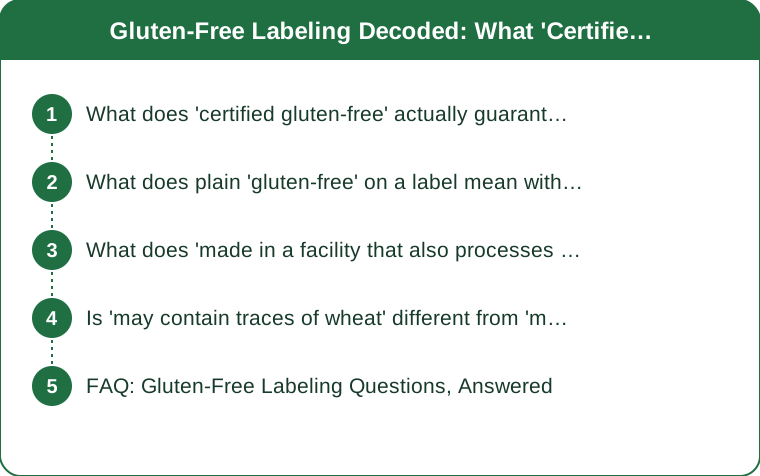
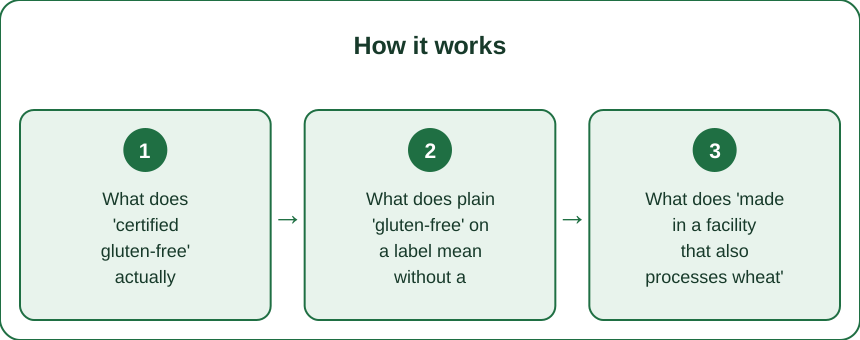
What does ‘certified gluten-free’ actually guarantee?
Third-party certification programs (like the Gluten-Free Certification Organization) require testing to under 10ppm in most cases, stricter than the FDA’s baseline 20ppm standard, plus facility audits and ongoing compliance checks — this is the strongest labeling assurance available for genuinely sensitive individuals or those with celiac disease.
What does plain ‘gluten-free’ on a label mean without a certification logo?
In the US, any product labeled ‘gluten-free’ is legally required to test under 20 parts per million (ppm) under FDA regulation — this is a real, enforceable standard, just a less strict threshold and without the additional facility auditing that third-party certification adds.

What does ‘made in a facility that also processes wheat’ actually mean?
This is a voluntary allergen disclosure, not a gluten-content measurement — it means the same equipment or facility handles wheat-containing products at some point, which raises cross-contamination possibility but doesn’t necessarily mean the specific product tested positive for gluten. Many such products are still genuinely safe; the phrase exists for legal caution, not as proof of contamination.
Is ‘may contain traces of wheat’ different from ‘made in a facility’ language?
Functionally similar in legal purpose, but ‘may contain’ phrasing typically signals a higher caution level — often used when shared equipment (not just a shared facility) is involved, meaning actual product contact risk is somewhat higher. For anyone with celiac disease or severe sensitivity, this specific phrasing is generally treated as a stronger reason to avoid the product entirely, not just a footnote.
FAQ: Gluten-Free Labeling Questions, Answered
Is certified gluten-free necessary for everyone avoiding gluten, or just celiac patients?
People with celiac disease or diagnosed severe gluten sensitivity generally benefit most from certified products; those avoiding gluten for general preference have more flexibility with standard FDA-regulated ‘gluten-free’ labeling.
Does naturally gluten-free food need a gluten-free label at all?
No — foods like plain rice or fresh vegetables are inherently gluten-free and don’t require any labeling, though some brands still add it for shopper clarity and marketing purposes.
Can a product be mislabeled as gluten-free?
Regulatory enforcement exists, but occasional recalls do happen — checking for a recognized certification logo adds an extra layer of confidence beyond the base FDA label alone.
TL;DR:
- Certified gluten-free means third-party tested, typically under 10ppm, plus facility audits
- Plain FDA ‘gluten-free’ means under 20ppm, legally enforced but less strict
- ‘Made in a facility with wheat’ is a voluntary disclosure, not a contamination guarantee
- ‘May contain traces’ typically signals higher actual contact risk — treat with more caution
For anyone with celiac disease, certified labels and ‘may contain’ warnings are worth taking seriously as distinct signals, not interchangeable disclaimers. This is general information, not medical advice.
Keep Reading
This article is for general informational purposes only and is not medical advice. Always consult a qualified health professional for guidance specific to you.