Are Oats Actually Gluten-Free? The Cross-Contamination Answer Most Labels Don't Explain
Quick Answer: Oats are naturally gluten-free, but most commercially grown and processed oats are cross-contaminated with wheat, barley, or rye during farming and milling. Look specifically for “certified gluten-free” oats — the certification means the supply chain was tested and segregated, not just that oats are naturally free of gluten.
You see “oats” on an ingredient list and assume it’s automatically safe. The plant itself doesn’t contain gluten, but the field it grew in and the mill that processed it very often did — and that’s the part most packaging doesn’t make obvious.

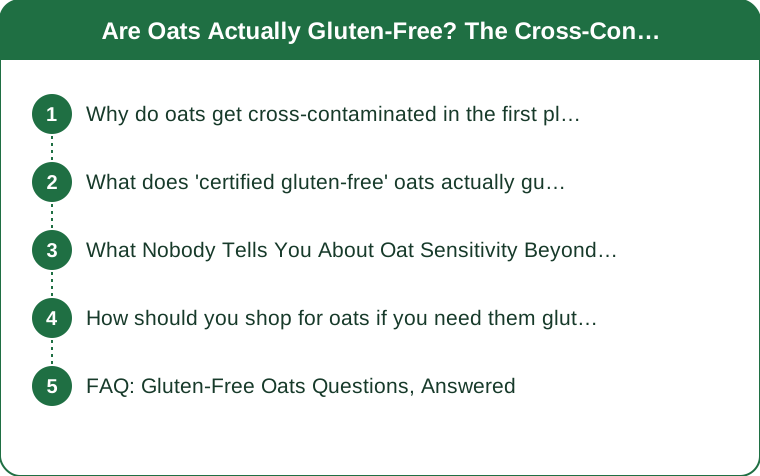
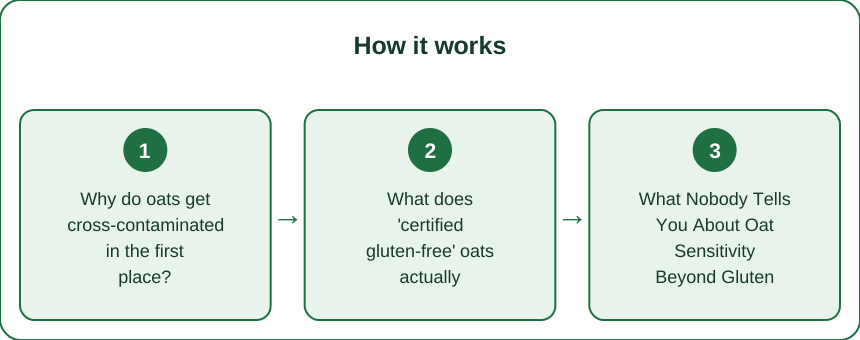
Why do oats get cross-contaminated in the first place?
Oats are frequently grown in crop rotation with wheat, barley, or rye in the same fields, and processed in shared mill equipment used for those grains. Without dedicated segregated farming and processing, trace amounts of gluten-containing grains routinely end up mixed in — not from the oat plant itself, but from the surrounding supply chain.
This is why a bag simply labeled “oats” with no gluten-free certification carries real cross-contamination risk for anyone with celiac disease, even though oats are botanically unrelated to wheat.
What does ‘certified gluten-free’ oats actually guarantee?
Certification means the oats were grown in dedicated fields, transported in dedicated equipment, and processed in dedicated facilities — or tested to below 20ppm gluten, the threshold most gluten-free standards require. This is a meaningfully different supply chain than standard oats, not just a marketing label.
Look for a recognized third-party certification mark on the package, not just the words “gluten-free” printed without a certifying body attached — the certified mark carries an actual testing standard behind it.

What Nobody Tells You About Oat Sensitivity Beyond Gluten
A small subset of people with celiac disease react to avenin, a protein naturally present in oats themselves — separate from cross-contamination entirely. This means even truly certified, uncontaminated gluten-free oats can cause symptoms for this smaller group.
If certified gluten-free oats still cause symptoms after ruling out cross-contamination, avenin sensitivity is worth discussing with a gastroenterologist rather than assuming the product itself was mislabeled.
How should you shop for oats if you need them gluten-free?
Buy oats specifically labeled and certified gluten-free by a recognized certifying body — this typically costs somewhat more than standard oats, reflecting the dedicated supply chain. Avoid bulk-bin oats entirely, since shared scoops and bins introduce contamination risk regardless of the oats’ own origin.
When eating out, ask specifically whether oatmeal or granola is made with certified gluten-free oats — many restaurants use standard oats even in otherwise gluten-free-labeled dishes.
FAQ: Gluten-Free Oats Questions, Answered
Is all oatmeal automatically unsafe for celiac disease?
Not unsafe by nature, but risky without certification — standard commercial oats have a meaningfully higher cross-contamination rate than certified gluten-free versions.
Why do certified gluten-free oats cost more?
The dedicated farming, transport, and processing required to avoid contamination adds real cost compared to oats grown and milled alongside wheat.
Can someone with celiac disease react to oats even if they’re certified gluten-free?
A small percentage react to avenin, a protein in oats themselves, separate from contamination — this is less common but worth discussing with a doctor if symptoms persist despite certified products. This is general information, not medical advice.
TL;DR:
- Oats are naturally gluten-free, but standard supply chains are frequently cross-contaminated
- “Certified gluten-free” means a tested, segregated supply chain — not just a marketing phrase
- A small subset of people react to avenin in oats regardless of contamination
- Avoid bulk-bin oats entirely; buy certified, and ask specifically when eating out. This is general information, not medical advice.
Keep Reading
This article is for general informational purposes only and is not medical advice. Always consult a qualified health professional for guidance specific to you.