Navigating Restaurants and Parties on a Gluten-Free Diet Without the Anxiety
Restaurants and other people’s homes turn gluten-free eating from a manageable kitchen routine into a source of real anxiety, mostly because control over ingredients and cross-contamination disappears. A few specific strategies restore some of that control without turning every social meal into an interrogation.

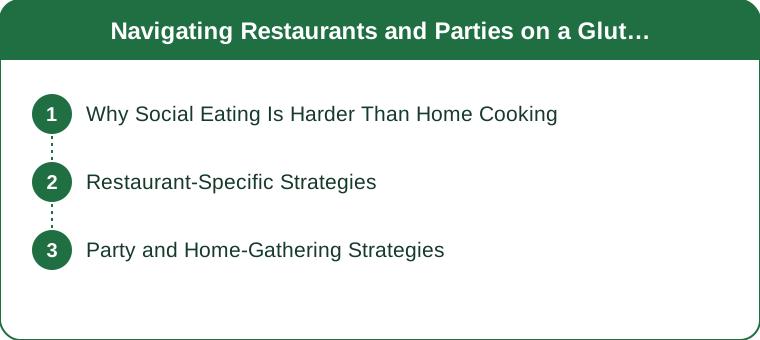
Why Social Eating Is Harder Than Home Cooking
The control gap: the the-cross-contamination-invisible-to-guests (the shared cooking surfaces, fryers, and utensils in restaurant kitchens creating cross-contamination risk that’s completely invisible from the dining room, per general food-safety practices in commercial kitchens), the the-hosts-underestimate-what-counts-as-gluten (a well-meaning host frequently not realizing that soy sauce, thickened sauces, or breadcrumb-coated items contain gluten, since it’s not an intuitive category without direct experience), the the-social-pressure-to-not-make-a-fuss (the social discomfort of asking detailed questions in front of a group often leading to underasking and accepting more risk than intended).

Restaurant-Specific Strategies
The practical approach: the the-call-ahead-during-off-hours (the calling the restaurant during a slow period rather than asking rushed questions during peak service, generally getting more accurate and detailed answers), the the-simple-preparations-lower-risk (the grilled proteins and plain vegetables carrying inherently lower cross-contamination risk than fried or sauce-heavy dishes, a useful default when information is limited), the the-dedicated-fryer-question (specifically asking about dedicated fryers when ordering fried food, since shared fryers with breaded items are a common and easy-to-miss contamination source).
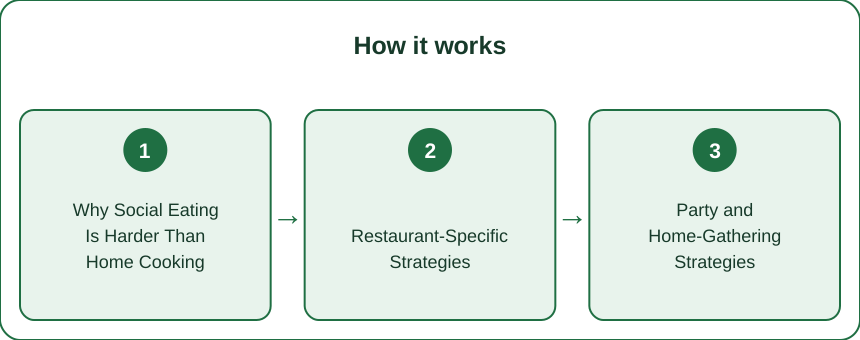
Party and Home-Gathering Strategies
The social approach: the the-offer-to-bring-a-dish (the bringing a gluten-free dish to share removing dependence on the host getting it right, while also giving a guaranteed-safe option), the the-eat-beforehand-as-a-backup-not-a-failure (the eating something small before a gathering being a reasonable backup plan rather than an admission of difficulty), the the-direct-simple-questions-beat-long-explanations (the asking one direct, simple question about a specific dish generally landing better socially than a long explanation of the condition), and the frame (restore control through preparation — calling ahead, bringing a dish — rather than through in-the-moment interrogation)).
Social eating is harder than home cooking on a gluten-free diet mainly because the control that exists in a home kitchen disappears — shared restaurant surfaces and fryers create invisible cross-contamination risk, and well-meaning hosts often don’t realize gluten hides in soy sauce, thickened sauces, or breading. The fix isn’t more in-the-moment questioning at the table, which tends to feel socially awkward and still gets underasked — it’s shifting the control earlier. Calling a restaurant ahead during a slow period gets more accurate answers than rushed questions during service, defaulting to simply prepared grilled proteins and vegetables lowers risk when information is limited, and specifically asking about dedicated fryers catches a commonly missed contamination source. For parties, bringing a dish to share guarantees at least one safe option regardless of what the host prepared, and eating something small beforehand is a reasonable backup, not a failure. Preparation ahead of time does more work than any question asked at the table. Navigating Restaurants and Parties on a Gluten-Free Diet Without the Anxiety.
Keep Reading
This article is for general informational purposes only and is not medical advice. Always consult a qualified health professional for guidance specific to you.