Gluten-Free Travel: Eating Safely and Well Away From Your Kitchen
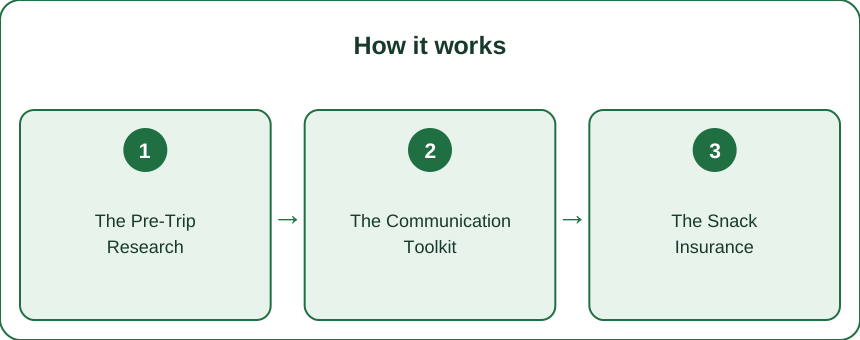
Gluten-free travel triggers a specific dread — the airport with nothing safe, the menu you can’t read, the vacation spent hungry — that preparation almost entirely dissolves. The travel system: the research ritual, the communication toolkit and the snack insurance.

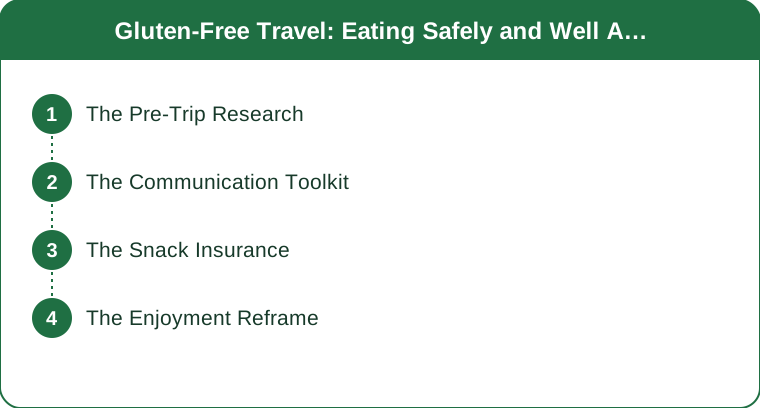
The Pre-Trip Research
The homework that pays: the destination scan (the gluten-free-traveler blogs and celiac-community forums for your destination — the crowd-sourced safe-restaurant lists that took someone else’s trial and error; the dedicated GF bakeries and 100%-GF restaurants mapped before landing), the cuisine literacy (each cuisine has natural safe zones and traps — the rice-based cuisines’ friendliness, the soy-sauce ambush in others, the hidden-flour traditions; thirty minutes of cuisine study prevents daily menu anxiety), the accommodation lever (the kitchenette booking that converts breakfast and some dinners into controlled meals — the apartment-hotel as dietary infrastructure), and the app tier (the GF-restaurant finder apps with recent reviews — downloaded and tested before the airport).
The Communication Toolkit
Being understood abroad: the translation card (the printed-or-phone card explaining gluten-free needs in the local language — including the celiac-severity version that distinguishes preference from medical; the cards available from celiac organizations are restaurant-tested phrasing), the key-phrases practice (the ‘does this contain flour/wheat/soy sauce’ basics — the spoken attempt plus the card covers most kitchens), the severity honesty (the celiac traveler communicates cross-contamination needs — shared fryers and pasta water; the sensitivity-tier traveler can flex; knowing your own line prevents both risk and over-restriction), and the kindness protocol (the patient, grateful tone that recruits kitchens as allies — the server who understands becomes your food-safety partner for the whole meal).

The Snack Insurance
Never stranded hungry: the flight kit (airports and airlines are GF roulette — the packed meal-and-snacks that make the travel day autonomous; the protein-bar-lab batch travels well, and the customs rules checked for the destination), the daypack standard (two snacks minimum on every excursion — the mid-hike and the delayed-lunch scenarios covered; hungry-and-optionless is the situation the whole system prevents), the arrival grocery run (the first-day supermarket visit stocking the room — the breakfast tier, the fruit, the local GF finds; the kitchenette earning its booking), and the emergency shortlist (the reliably-safe fallbacks in most places — the plain-rice, grilled-meat, salad-undressed tier ordered carefully; the fallback meal that’s boring and safe beats the exciting gamble).
The Enjoyment Reframe
Traveling like it’s a vacation: the discovery flip (GF travel research surfaces places you’d never find otherwise — the dedicated bakery that becomes the trip’s highlight; the restriction that accidentally curates), the local-naturally-GF hunt (every cuisine has traditional dishes that were always gluten-free — the exploration angle that beats the substitution angle; eating the culture’s rice-and-corn traditions over its bread imitations), the mistake protocol (the accidental glutening away from home — the rest-hydration-and-gentleness plan packed mentally; it happens, it passes, the trip continues), and the confidence compounding (each trip’s system improves the next — the traveler who dreaded the first GF trip runs the fifth on autopilot; the dread was a preparation gap, and preparation travels). Researched, carded, snacked: the world stays open.
Research the destination’s GF map, carry the translation card, pack snack insurance, hunt the naturally-GF dishes. Gluten-free travel is a preparation system — built once, the dread retires.
Keep Reading
This article is for general informational purposes only and is not medical advice. Always consult a qualified health professional for guidance specific to you.